

Python for Machine Learning and Data Science



- Description
- Curriculum
- Reviews
Course Description
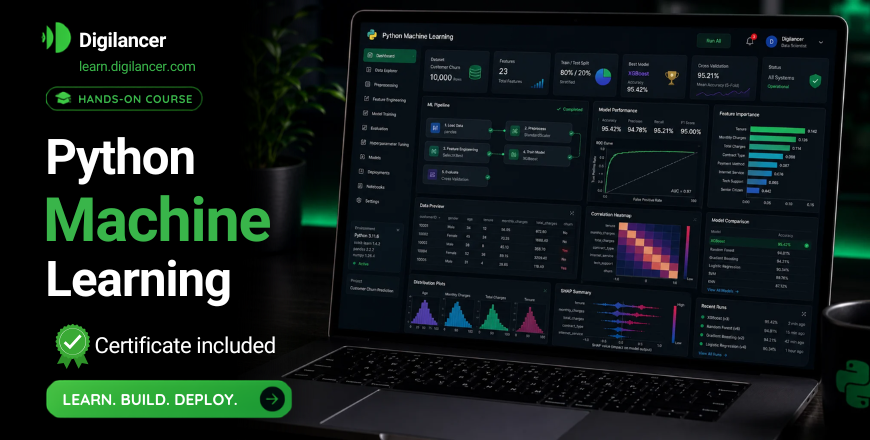
Python for Machine Learning and Data Science is a beginner-friendly course designed to introduce learners to the essential Python libraries and techniques used in data science, machine learning, and data analysis workflows. The course focuses on building practical skills in numerical computing, data manipulation, preprocessing, and visualization using widely used Python tools.
Throughout the course, learners will explore NumPy for numerical operations and array processing, Pandas for handling structured datasets and DataFrames, and Matplotlib and Seaborn for creating meaningful visualizations and analyzing patterns within data.
Students will learn how to work with datasets from multiple sources, perform preprocessing tasks, manipulate and organize structured data, and create visual representations that support data-driven decision-making. The course combines theoretical concepts with practical examples to help learners understand real-world applications of Python in machine learning and analytics.
By the end of this course, learners will have a solid understanding of data handling techniques and foundational skills required for advanced machine learning and data science projects.
Course Objectives
This course aims to help learners:
- Develop strong foundations in Python for data science
- Understand numerical computing concepts using NumPy
- Learn efficient array manipulation techniques
- Work with structured datasets using Pandas
- Perform dataset cleaning and preprocessing
- Manipulate and organize DataFrames effectively
- Import data from different file formats and sources
- Build professional visualizations using Matplotlib and Seaborn
- Prepare datasets for machine learning workflows
What You Will Learn
Throughout this course, students will learn:
NumPy Fundamentals
- Creating and manipulating arrays
- Array slicing and indexing
- Mathematical operations on arrays
- Vectorized computation techniques
- Numerical computing concepts
Pandas for Data Processing
- Working with Series and DataFrames
- Reading datasets from different sources
- Data cleaning and transformation
- Filtering and organizing datasets
- Handling missing values
Data Visualization
- Creating charts using Matplotlib
- Building statistical visualizations with Seaborn
- Trend and distribution analysis
- Correlation analysis
- Improving visualization quality
Skills You Will Gain
By completing this course, learners will develop skills in:
- Data preprocessing
- Numerical computation
- Dataset manipulation
- Data cleaning techniques
- Exploratory Data Analysis (EDA)
- Visualization and reporting
- Structured data handling
- Machine learning data preparation
Who This Course Is For?
This course is suitable for:
- Beginners interested in Machine Learning
- Students learning Data Science
- Aspiring Data Analysts
- Computer Science Students
- Developers transitioning into AI and ML
- Anyone interested in Python-based analytics
Prerequisites
Before taking this course, learners should have:
- Basic computer knowledge
- Interest in programming and analytics
- Basic understanding of Python (helpful but not mandatory)
- No previous machine learning experience required
Course Outcome
By the end of this course, learners will have a strong understanding of Python libraries used in machine learning and data science. They will be able to manipulate datasets, perform preprocessing tasks, visualize data effectively, and build a solid foundation for advanced machine learning concepts and real-world analytical projects.
-
1
 1. Introduction to NumPy in Python
This lesson introduces NumPy, a core Python library used for numerical computing and data manipulation. Students will learn why NumPy is widely adopted in machine learning and data science and how it improves performance when working with large datasets.
-
2
2. Slicing Array
This lesson focuses on array slicing techniques that allow students to access, extract, and manipulate subsets of data efficiently using NumPy arrays.
-
3
3. Operations on a Array - Part 1
This lesson introduces essential mathematical operations performed on NumPy arrays, enabling students to process numerical datasets efficiently and perform calculations used in machine learning workflows.
-
4
4. Operations on a Array - Part 2
This lesson continues the exploration of NumPy array operations by introducing more advanced techniques for performing efficient computations, transformations, and manipulations on numerical datasets.
-
5
5. Pandas in Python - Part 1
This lesson introduces Pandas, one of the most widely used Python libraries for data analysis and manipulation. Students will learn the basics of working with structured datasets using Pandas.
-
6
6. Pandas in Python - Part 2
This lesson expands on Pandas concepts by introducing advanced data manipulation techniques commonly used during machine learning and data science projects.
-
7
7. Pandas Dataframe in Python
This lesson introduces DataFrames, the core data structure in Pandas, and teaches students how to create, manipulate, and analyze tabular datasets efficiently.
-
8
8. Manipulating Dataframe and Reading Data from different sources
This lesson focuses on manipulating Pandas DataFrames and importing datasets from multiple file formats and sources. Learners will understand how to organize, clean, and prepare structured data for machine learning and analytical workflows.
-
9
9. Data Visualization using Matplotlib and Seaborn- Part 1
This lesson introduces the foundations of data visualization using Matplotlib and Seaborn, helping learners understand how graphical representations improve data analysis and decision-making.
-
10
10. Data Visualization using Matplotlib and Seaborn Part 2
This lesson expands visualization concepts by introducing different chart types and customization techniques used to analyze data effectively.
-
11
11. Data Visualization using Matplotlib and Seaborn Part 3
This lesson introduces advanced visualization techniques used to identify relationships, detect outliers, and explore hidden patterns in datasets.
-
12
12. Data Visualization using Matplotlib and Seaborn Part 4
This lesson focuses on visualization refinement and advanced customization methods that improve chart quality, readability, and presentation standards.