

A B C of Coding to Build AI Agents


- Description
- Curriculum
- Reviews
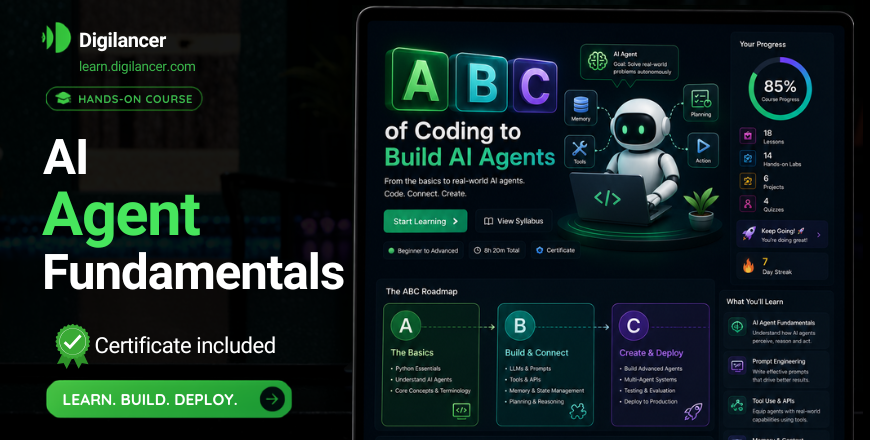
A B C of Coding to Build AI Agents is a comprehensive beginner-to-intermediate level course designed to equip learners with the essential programming and technical foundations required to build modern AI agents and intelligent applications.
This course takes a structured, step-by-step approach starting from Python fundamentals and gradually progressing toward advanced concepts such as data handling, visualization, APIs, and AI-oriented programming workflows. It is specially designed for learners who want to move from basic coding knowledge to building real-world AI-powered systems.
Throughout the course, learners will develop a strong understanding of how software systems process data, make decisions, and interact with external services. Python is used as the primary programming language due to its simplicity, flexibility, and strong ecosystem for AI and machine learning development.
Students will begin by learning core programming concepts such as variables, data types, conditional statements, loops, and functions. As the course progresses, they will explore essential libraries like NumPy and Pandas for data processing, followed by Matplotlib for data visualization and analysis.
The course also introduces API integration, which is a crucial skill for building AI agents that can interact with external tools, services, and real-time data sources. Learners will understand how modern AI systems communicate with APIs, process responses, and integrate external intelligence into applications.
By the end of the course, learners will be able to understand how AI agents are built, how data flows through intelligent systems, and how Python-based applications can be structured to perform real-world automation and decision-making tasks.
What You Will Learn
- Python programming fundamentals for AI development
- Core programming concepts: variables, loops, functions, and conditions
- Working with Python libraries like NumPy and Pandas
- Data visualization using Matplotlib
- Data preprocessing and cleaning techniques
- Handling real-world datasets
- Understanding and implementing APIs
- Building logic for AI-driven applications
- Foundational knowledge for AI agents and automation systems
Skills You Will Gain
- Python programming
- Problem-solving using code
- Data handling and analysis
- Data visualization
- API integration
- Automation workflows
- Foundational AI development skills
- Structured programming for intelligent systems
Who This Course Is For?
- Beginners in programming
- Students interested in AI and machine learning
- Developers starting their AI journey
- Data science beginners
- Anyone interested in building AI agents
- Freelancers and professionals upgrading their tech skills
Course Structure Overview
- Introduction to Python Programming
- Loops, Functions, and Core Logic Building
- Python Libraries for Data Processing
- Data Visualization with Matplotlib and Pandas
- Working with APIs and External Systems
Course Outcome
After completing this course, learners will have a strong foundation in Python programming and will be able to understand how AI agents are built and how intelligent systems operate. They will be capable of working with data, visualizing insights, integrating APIs, and developing structured logic required for modern AI applications.
-
1
 1. Introduction to the Course
This lesson introduces the course structure, learning roadmap, and explains how Python programming acts as the foundation for building AI agents, automation systems, and intelligent applications.
Artificial Intelligence systems and autonomous agents depend heavily on programming because code controls how systems process information, make decisions, and interact with users. Before building advanced AI applications, developers must first understand the programming foundations that power these systems.
This lesson provides an overview of the course objectives, teaching approach, and practical learning workflow. Students will understand what AI agents are, how coding contributes to intelligent behavior, and why Python has become the preferred language for AI development.
Learners will also explore the relationship between programming logic and AI workflows, helping them understand how foundational coding concepts connect with advanced technologies.
The lesson introduces the learning journey that students will follow throughout the course and explains how each module contributes toward building intelligent systems.
Topics Covered:
- Course Introduction and Structure
- Understanding AI Agents
- Role of Programming in AI
- Why Python is Used for AI Development
- Learning Roadmap and Expectations
- Practical Learning Workflow
- AI Development Ecosystem Overview
- Real-World AI Applications
Why This Lesson is Important:
- Builds learning direction
- Introduces AI development concepts
- Creates programming context
- Establishes foundations for future modules
Practical Applications:
- Conversational AI systems
- Automation workflows
- Intelligent assistants
- AI-powered applications
- Decision-making systems
Learning Outcomes:
By the end of this lesson, learners will be able to:
- Understand the course structure
- Explain the purpose of AI agents
- Recognize Python’s role in AI development
- Understand the programming foundation required for intelligent system
-
2
2. Overview of Python
This lesson introduces Python fundamentals and explains why Python has become one of the most important programming languages for AI, machine learning, automation, and intelligent systems.
-
3
3. Variables and Data Types and Codes
This lesson introduces variables, data types, and coding fundamentals used for storing, organizing, and processing information within software applications.
-
4
4. Understanding Conditional Statements and Codes
This lesson introduces conditional logic and decision-making structures that allow programs and AI systems to respond dynamically to different situations.
-
5
5. Implementing Conditional Statements
This lesson focuses on the practical implementation of conditional statements in Python and demonstrates how decision-making logic is used to create dynamic, responsive, and intelligent applications.
-
6
6. Functions in Python
This lesson introduces Python functions and explains how reusable code blocks simplify development, improve efficiency, and support scalable software design.
-
7
7. Functions in Python - Part 2
This lesson expands function concepts by introducing advanced function usage, parameter handling, return values, and techniques for building modular applications.
-
8
1. Understanding Looping Constructs
This lesson introduces looping constructs and explains how repetitive execution allows programs to automate tasks and process information efficiently.
-
9
2. Looping Constructs
This lesson focuses on implementing loops in Python and demonstrates how iterative structures automate workflows and process data efficiently.
-
10
3. Modules and Packages in Python
This lesson introduces modules and packages and explains how code organization improves maintainability, scalability, and software development efficiency.
-
11
4. Hands on Python Best Practices
This lesson introduces coding best practices that improve code quality, readability, maintainability, and development efficiency.
-
12
5. AI&ML Blackbelt Plus Program
This lesson provides an overview of advanced AI and machine learning learning pathways and explains how foundational programming skills connect with more advanced AI development topics.
-
13
1. The Basics of NumPy
This lesson introduces NumPy fundamentals and explains how numerical computing libraries simplify data processing and mathematical operations used in AI and machine learning systems.
-
14
2. Hands-on The Basics of NumPy
This lesson provides practical exercises for implementing NumPy fundamentals and applying array operations through hands-on coding activities.
-
15
3. Arithmetic Universal Functions in NumPy
This lesson introduces NumPy’s arithmetic universal functions and explains how vectorized operations improve computational efficiency and simplify mathematical processing.
-
16
1. The Basics of Matplotlib Types of Plots
This lesson introduces Matplotlib fundamentals and explains different plot types used for visualizing datasets, identifying trends, and understanding relationships within data.
-
17
2. The Basics of Matplotlib Customizing Plots
This lesson focuses on plot customization techniques that improve readability, presentation quality, and communication effectiveness.
-
18
3. The Basics of Pandas Understanding the Dataset
This lesson introduces Pandas fundamentals and explains how datasets are loaded, explored, and analyzed before machine learning workflows begin.
-
19
4. Handling Missing Values and Modifying the Dataset
This lesson introduces data cleaning techniques used to identify missing values, modify datasets, and improve data quality before model training.
-
20
1. Working with APIs
This lesson introduces API fundamentals and explains how APIs enable communication between software systems, applications, and intelligent services.
-
21
2. Accessing APIs using Python
This lesson focuses on accessing APIs programmatically using Python and demonstrates how applications retrieve and process information from external services.
-
22
3. API Best Practices
This lesson introduces best practices for designing, accessing, and maintaining APIs securely and efficiently within modern applications.